Linn County, Iowa

Shifting Power in Linn County

How data center growth is changing who decides on water, energy, and land use.

A visual timeline, 2012 to 2026

Published July 8, 2026

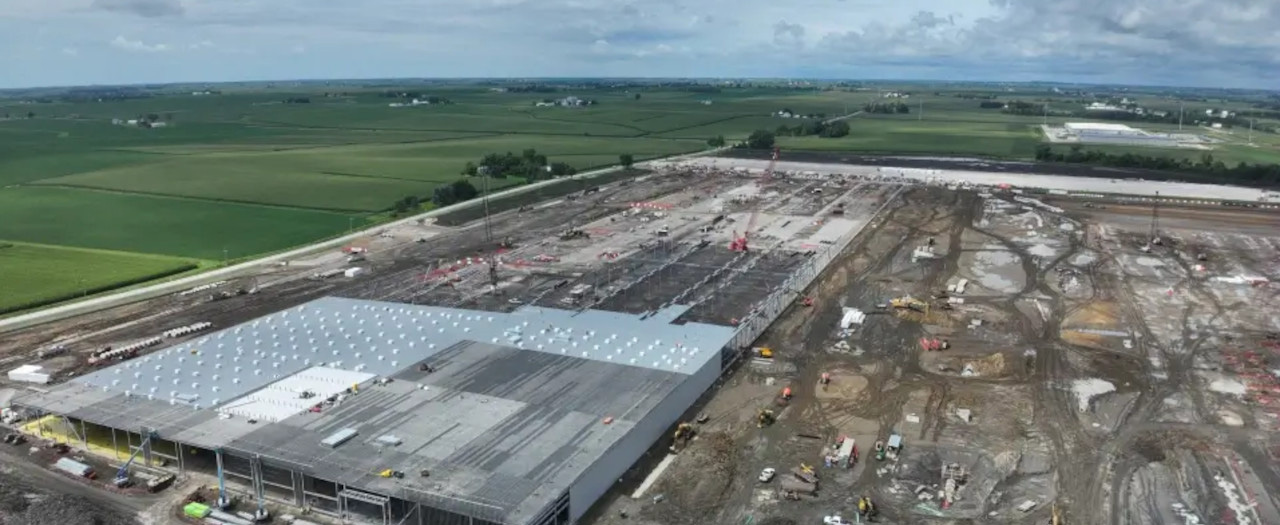
Construction continues on the QTS data center complex in southwest Cedar Rapids
Construction continues on the QTS data center complex in southwest Cedar Rapids. Credit: QTS

What started as an economic development announcement became a public argument about who controls resources in a county that did not ask to host data centers on a scale that reshaped local debates about water, energy, and land.

"A standard is a line drawn for an entire population. It's not a promise that a person living half a mile away won't be harmed."

Michelle Lee, oncology nurse and Morgan Valley resident, June 24, 2026

Nov. 2012

Smaller data centers were already here

The Cedar Rapids area had smaller commercial data-center infrastructure before the current wave of large projects. Enseva's facility in Hiawatha, a suburb of Cedar Rapids, opened in November 2012, offering colocation, network access, and private cloud services.

Source: Enseva Hiawatha

Mar. 21, 2024

Google is named in Cedar Rapids

Cedar Rapids publicly identified Google as the company behind a proposed data center project tied to a development agreement and a state incentives application. City officials said the project involved a minimum investment of $576 million for one or more data centers.

Sources: City of Cedar Rapids; Corridor Business Journal

Jan. 28, 2025

A second major player enters Cedar Rapids

Cedar Rapids City Council approved a development agreement with QTS (Quality Technology Services), a national data center operator, bringing a second large-scale campus to Big Cedar Industrial Center, an industrial development area in southwest Cedar Rapids. With a planned investment of more than $750 million, the QTS campus occupies 612 acres of the Big Cedar Industrial Center, adjacent to Google's site — what city officials called the largest economic investment in Cedar Rapids history.

Source: Corridor Business Journal

May 29, 2025

Google scales up its Iowa ambitions

Google said it would invest an additional $7 billion in Iowa over the next two years in cloud and AI infrastructure. The announcement reflected both a new data center in Cedar Rapids and expansion of its existing facility in Council Bluffs.

From left: Cedar Rapids Mayor Tiffany O'Donnell; Jebediah Novak, Training Coordinator, Cedar Rapids Electrical Training Center; Rep. Ashley Hinson; Ruth Porat, President and Chief Investment Officer, Alphabet and Google; Gov. Kim Reynolds; Sen. Joni Ernst; and Allie Hopkins, Data Center Operations and Area Lead, Google Data Centers Iowa and Nebraska. The group stands outside the Cedar Rapids Google data center facility during the May 2025 investment announcement.
From left: Cedar Rapids Mayor Tiffany O'Donnell; Jebediah Novak, Training Coordinator, Cedar Rapids Electrical Training Center; Rep. Ashley Hinson; Ruth Porat, President and Chief Investment Officer, Alphabet and Google; Gov. Kim Reynolds; Sen. Joni Ernst; Allie Hopkins, Data Center Operations and Area Lead, Google Data Centers Iowa and Nebraska. Credit: Google / The Keyword

Source: Google Blog

Jan. 14, 2026

Power demand shapes the energy picture

Linn County supervisors approved rezoning for NextEra Energy's proposed restart of the Duane Arnold Energy Center, a shuttered nuclear plant near the small city of Palo, northwest of Cedar Rapids. The decision marked the county's first formal step toward meeting data center power demand. In a separate agreement, NextEra committed to supply Google with a majority of the plant's output if the restart moved forward.

Source: Iowa Public Radio

Feb. 2026

Linn County writes new rules

Linn County approved an ordinance creating new zoning rules for data centers in unincorporated areas (land outside city limits where the county has direct zoning authority). For large projects, the county required a water study, a Water Use Agreement, and an Economic Development Agreement, along with rules covering setbacks, noise, traffic, and emergency planning.

Sources: Linn County; Approved ordinance (PDF)

Mar. 4, 2026

Google shifts toward Palo

Linn County officials announced that Google had decided to pursue data center development in Palo — a small city northwest of Cedar Rapids near the Duane Arnold site — by seeking to have the land incorporated into Palo's city boundaries, a move the city said it did not solicit but agreed to consider. By building within a city, Google would no longer be bound by the county's new ordinance.

Source: Iowa Public Radio

Mar. 4, 2026 (continued)

Water becomes the central fight

The county's ordinance would have required a water availability study, an assessment of whether the Cedar River could sustain the proposed draw, — and binding agreements on water use. County Chair Kirsten Running-Marquardt said Google had previously told her the data center buildings would use roughly 12 million gallons of water per day. By moving to Palo, those requirements no longer applied.

Source: Iowa Public Radio

July 1, 2026

The county pauses new development

Linn County approved an 18-month moratorium on new applications to rezone property for large-scale data centers in unincorporated areas, passing 2-1 after three hours of public comment. The vote does not affect projects already underway in Cedar Rapids or Palo, which fall under city jurisdiction. Supervisor Sami Scheetz, who voted against it, argued the moratorium would push future development toward cities with fewer protections. The moratorium runs through Jan. 1, 2028.
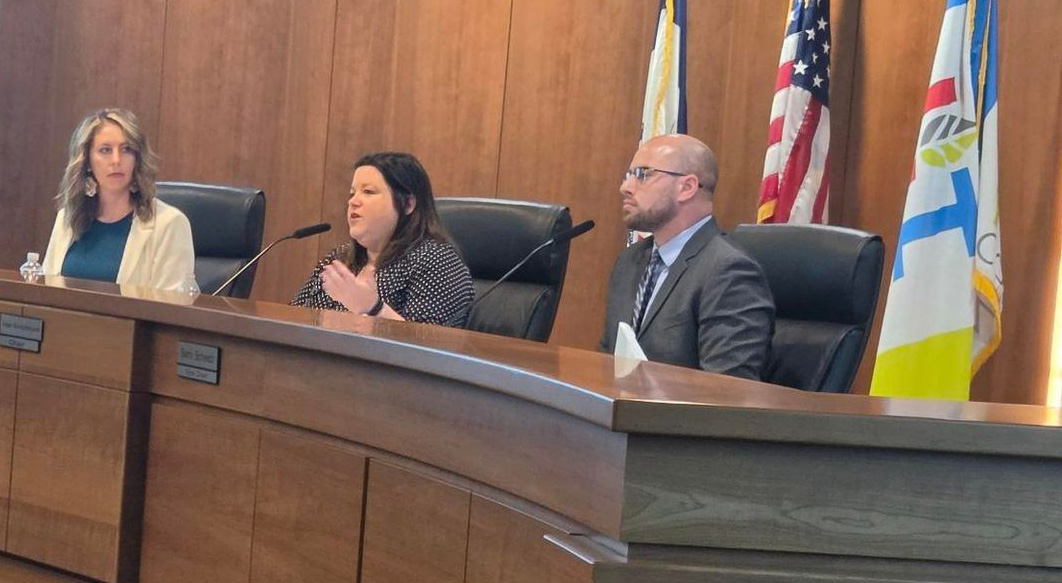
Left to right, Linn County Supervisors Brandy Meisheid, Kirsten Running-Marquardt, and Sami Scheetz.
Left to right, Linn County Supervisors Brandy Meisheid, Kirsten Running-Marquardt, and Sami Scheetz. Credit: CBS2Iowa.com

Sources: Linn County; Corridor Business Journal

July 1, 2026 (continued)

A gas plant and open questions

The moratorium vote came the same day regional utility Alliant Energy confirmed plans to power the Cedar Rapids data centers with a proposed 720-megawatt natural gas plant in Morgan Valley, a rural area in western Linn County, adding air quality concerns and higher electricity costs for ordinary customers to a debate that had centered on water and land use. The moratorium is a pause, not a resolution. The underlying questions about water use, energy infrastructure, regulatory authority, and the pace of development remain open.

Source: Corridor Business Journal

Cedar River Cedar Rapids Palo Hiawatha Enseva (Hiawatha) Google / Cedar Rapids QTS Palo Duane Arnold ~12M gallons/day proposed draw from Cedar River 18-month moratorium unincorporated Linn County

Location Active in this step Cedar River County regulation area

Schematic map. Locations are approximate editorial anchors.

At a glance

$1.33B+

Combined investment

Google $576M + QTS $750M, Cedar Rapids minimum commitments

615 MW

Duane Arnold capacity

Iowa's only nuclear plant, near Palo; proposed restart to serve data center power demand

61

Permanent jobs promised

Google 31 + QTS 30 minimum, once operational

12M gal/day

Proposed water draw

From Cedar River, per county officials

720 MW

Proposed gas plant

Alliant Energy, Morgan Valley, western Linn County

100+ tons

Estimated air pollution

Annual emissions from proposed gas plant, per county chair

612 acres

QTS campus footprint

At Big Cedar Industrial Center, adjacent to Google site

18 months

Development pause

Moratorium on new unincorporated-area rezoning, through Jan. 1, 2028

Comparison of Resources: Water, Energy, and Land

Three areas where data center growth is reshaping what Linn County uses, produces, and protects.

Water

More than a city's worth

The proposed data center draw from the Cedar River — 12 million gallons per day — would exceed the estimated daily residential water use of all Cedar Rapids residents combined. Those requirements no longer applied once Google moved its project to Palo.

Cedar Rapids residents~137,000 people
0Mgal / day
Proposed data centersGoogle + QTS, per county officials
0Mgal / day

What about well water?

The county's required water balance study would have assessed impacts on groundwater and current water users — including rural residents on private wells. When Google moved to Palo, the county lost jurisdiction and the study was dropped. Whether the Cedar River draw would affect the aquifer supplying well water in western Linn County remains unanswered.

Cedar Rapids residential estimate based on U.S. EPA average of 80 gallons per person per day applied to a population of approximately 137,000. Data center figure per Linn County officials, as reported by Iowa Public Radio, March 2026.

Energy

A grid reshaped

New power capacity proposed for data centers would be nearly three times Linn County's current average electricity demand. That new capacity splits between a nuclear restart with no emissions and a natural gas plant that would add to both air pollution and electricity costs for residents.

Linn County today458 MW avg. demand
New capacity for data centers
Duane Arnold nuclear615 MW proposed restart Alliant gas plant720 MW proposed

Cedar Rapids residential electricity rate

17.1¢/kWh Cedar Rapids today
vs.
13.5¢/kWh Iowa average
vs.
? Post-2029 outlook

Cedar Rapids already pays 27% above the Iowa average. Alliant Energy's Iowa base rate moratorium holds through approximately 2029. What comes after, and who pays for new grid infrastructure built to serve data centers, remains unanswered. At a public meeting June 24, 2026, County Chair Running-Marquardt asked Alliant directly whether residential customers would bear those infrastructure costs. Alliant's representative declined to answer.

National modeling: data center expansion could drive wholesale electricity costs up 6-29% nationally by 2030, with some states reaching higher. Environmental Research Letters, May 2026.

County demand derived from Linn County annual consumption of 4,016,846 MWh (EIA / FindEnergy). Duane Arnold capacity per NextEra Energy. Gas plant capacity per Corridor Business Journal. Electricity rates per FindEnergy, Nov. 2024.

Air quality and health

What is PM2.5?

Particulate matter smaller than 2.5 microns — fine enough to bypass nasal filtration and reach deep into the lungs. The EPA regulates it as a priority pollutant. It is associated with asthma, respiratory failure, and cardiovascular disease.

"There is no safe level of exposure to PM2.5. If I were a highly sensitive individual, I would be concerned." Dr. Gregory Carmichael, University of Iowa air quality researcher

The Morgan Valley area currently meets EPA air quality limits. Regulators must determine whether the plant's emissions would push concentrations above those thresholds. Dr. Carmichael notes the impact would be immediate once the plant begins operating.

Source: CBS2Iowa, June 16, 2026

Where is Morgan Valley?

Cedar River Hwy 30 Cedar Rapids Palo / Duane Arnold Morgan Valley proposed gas plant 160 acres, 3 turbines N Schematic. Locations approximate.

Site: near Hwy 30 and Linn-Benton Road, western Linn County. Three simple-cycle natural gas turbines. Construction proposed Q2 2027 pending permits; in service Q2 2030.

Data heat island effect: estimated reach across Linn County

A 2026 international preprint study found an average land surface temperature increase of 2°C (3.6°F) across a roughly 6-mile radius of AI data centers, a phenomenon researchers call the "data heat island effect." That is an average across the full zone, not a per-distance figure. Temperature effects likely diminish closer to the edges of that radius, but the study's available reporting does not break down the gradient by distance. The concentric rings here represent the overall affected area; the labeled temperature applies to the zone as a whole. That radius from the southwest Cedar Rapids campus covers much of the city. Study not yet peer-reviewed. Source: Gizmodo, reporting on preprint by international research team, 2026.

Cedar River Hwy 30 Marion Hiawatha Cedar Rapids (city center) Palo / Duane Arnold Morgan Valley proposed gas plant QTS / Google campus (epicenter, SW Cedar Rapids) 2 mi. 4 mi. 6 mi. / avg. +2°C land surface temp. (2026 preprint) ESTIMATED HEAT EFFECT Higher (0–2 mi.) Moderate (2–4 mi.) Outer zone (4–6 mi.) N Schematic. Locations approximate. Inner zones conceptual; 6-mile ring based on 2026 preprint study (not peer-reviewed).

Land

Cornfields to campuses

The 1,391-acre Big Cedar Industrial Center in southwest Cedar Rapids was assembled from private landowners in 2016. In Iowa, privately held land of that scale is overwhelmingly row crop agriculture. Today, 612 of those acres are under construction as the QTS data center campus. Proposed projects in unincorporated Linn County are largely targeting additional farmland.

Big Cedar Industrial Center: 1,391 acres

Private farmland
Private farmland, 1,391 acres (pre-2016)

Each square represents approximately 10 acres. Land was assembled from private farmland owners beginning in 2016. Source: Alliant Energy; Corridor Business Journal, 2025.

Also in the picture

Cornfields

Palo campus

Google's proposed unincorporated-area campus near Palo sits adjacent to "hundreds of acres of cornfields," per Inside Climate News. The site lies alongside the Duane Arnold nuclear plant.

160 acres

Morgan Valley

The proposed Alliant Energy gas plant footprint is 160 acres of rural agricultural land in western Linn County, near the intersection of Hwy 30 and Linn-Benton Road.

Over 2/3

Moratorium coverage

Unincorporated Linn County, where most new data center applications target farmland, makes up more than two-thirds of the county's geographic footprint. The 18-month moratorium covers new rezoning in this area.

Big Cedar assembly from private landowners: Alliant Energy, Nov. 2016. QTS footprint: Corridor Business Journal, 2025. Palo cornfields: Inside Climate News, Mar. 1, 2026. Morgan Valley acreage: Corridor Business Journal. Unincorporated area proportion: Inside Climate News, Mar. 1, 2026.